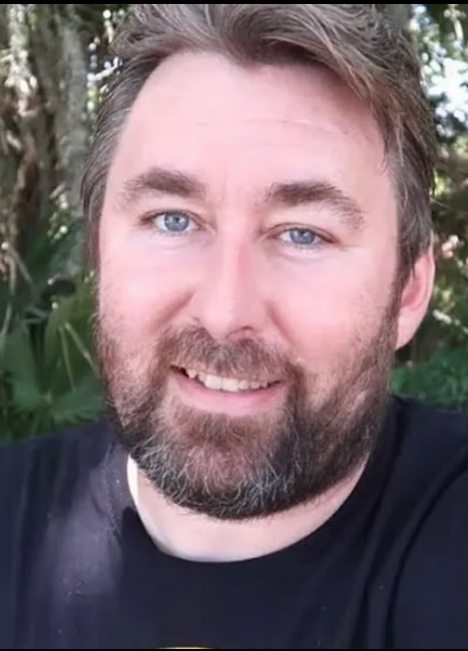
 Adam the Woo was a YouTuber who I have watched with fairly regularity over the past 6 or 7 years, maybe even longer.
I didn’t know him in any capacity except for his YouTube videos. Today, December 22, it was reported that Adam had died in his sleep at age 51, but the exact cause of death hasn’t been determined and probably won’t be, according to official sources for several weeks, possibly longer. There is speculation that it was a heart attack.
The news of his passing was a complete shock. I’m deeply saddened, because I genuinely liked Adam and his work.
He had just, a few days before his passing, returned from spending about a month traveling out of the country. I admit that I was not interested in his foreign travels, and only watched a few of the videos documenting that trip. In a few videos prior to his departure for the international travel adventure, he had talked about what he wanted to do with his channel in 2026 and that was to get back to traveling the US—exploring back roads, small towns, the overlooked places, stopping along the way to explore and film what he found. He was going to do this as a cross country trip, eventually ending up on the West coast. He was really looking forward to the trip (as was I and a lot of other folks) and he was wondering if he should leave New Years eve or New Years day. But, now, that is a moot point. Going into 2026 is going to be a bit sadder for sure.
There are several reasons I’m writing this blog entry, but the most immediate is simple: I’m trying to work through the sadness and sense of loss I feel. Even though I didn’t know Adam personally, his presence in my life meant something. It had value. And that kind of impact deserves to be acknowledged and understood, especially when trying to make sense of why his absence feels so heavy.
Felt a Kinship With Adam
I felt a kind of kinship with Adam on different levels, and as I watched tribute and memorial videos from others, I realized how common that feeling was. Adam felt like a friend. And I think that’s how he viewed the people who watched his videos, too—maybe even the ones who never pressed play—as friends.
Part of that connection came from shared struggles. For Adam and myself, it was weight loss and gain, each of us experiencing the ups and downs of that struggle. If I’m remembering correctly, earlier this year, 2025 (though time tends to blur) he made a focused effort to lose weight, and the change was noticeable. I’ve wondered whether that rapid shift might have put strain on his body—especially his heart—given that there have been hints he may have passed from a heart attack. I remember that he had cycled through, what I thought to be rapid weight loss and then gradual regain multiple times during the six or seven years I followed his channel, and I can’t help but wonder whether that pattern had taken a toll on his health in ways he wasn’t aware of. I’ve even thought about Cass Elliott—another beloved figure—who reportedly lost a great deal of weight not long before her death of a heart attack (in her sleep!) in 1974, and how some believed that quick weight loss contributed to her heart failure.
Of course, I don’t know what happened to Adam. None of us do, not really—not yet. These thoughts are just me trying to understand something painful and unexpected. It’s entirely possible his death was from natural causes; sometimes life ends without warning or explanation. But whether or not my speculation holds any truth, the core remains: someone who meant something to me is gone, and I’m left trying to make sense of the space he once filled.
The second connection I felt with Adam was our shared sense of sentiment and nostalgia. We were both the kind of people who found comfort and happiness in revisiting the people, places, and things from our past—those touch points where good memories and positive emotions lived. I think that’s why Adam returned to certain locations again and again: to reconnect with the moments that shaped him, to feel the warmth of those old memories, and maybe even to face the difficult ones with honesty and grace.
A third area where I felt kinship with Adam was how we both experienced bullying and harassment over the years for being who we were and what we were and weren’t. Adam received his fair share of cheap shots from people who seemed determined to tear him down. But he accepted that as part of the life of a YouTuber I guess, when you become visible, it isn’t just the good folks whose attention you attract. Anyway, Adam sort of just shrugged things off, he didn’t carry the weight of their issues or make their problems his own. Instead, he kept moving forward, kept creating, kept showing up. And because he stayed true to himself, so many people—myself included—admired him all the more.
The fourth area of kinship is and I am not sure if I have the right words for this, but we both shared a kind of star struck wonder. He was by his own description, an “80s pop culture nerd with a desire to travel and video what I see.” As a kid, I was into admiring the celebrities, TV shows, music and more of the 70s. I didn’t dive into things to the same extent Adam did, but I had my own areas of interest that meant a lot to me. I also wasn’t as drawn to the pop culture of the ’80s as he was, yet I could still relate to some degree,to that same kind of curiosity and passion.
The Real Deal
I admired his sense of adventure. I admired his sense of self and independence—he did what he wanted to do, both with his YouTube channel and with his life. He pursued his interests and passions without apology and he never asked for or needed anyone’s approval or permission to just be who he was. Adam appeared to be genuine and authentic in his videos and from what I have come to discover by those who knew him personally and spoke about him, he was the same person in person as he was in his videos. Adam the Woo was not an Internet persona, it was the real deal.
Original Adam
I didn’t follow or even know about Adam during his early years on YouTube to be honest. I guess during that time frame, he was one of the original content creators who explored abandoned places as well as being one of the first theme park Youtubers, visiting places like Disney a lot.
Adam had lived in California off and on over the years and he made a lot of videos while there that dealt with Hollywood. As mentioned, he seemed to love all of the “Hollywood vibe” (maybe that is a better term for it than “star struck”) the movies, the TV shows, the entertainment history, filming locations, celebrities and all of that larger-than-life creative energy associated with all those things and more.
I remember him mentioning in one of his videos that Three’s Company was one of his favorite sitcoms. He even had the chance to meet Joyce DeWitt, and—if my memory is right—she told him he reminded her of John Ritter, Joyce’s co-star and an actor I think he admired. I sometimes wonder whether, back when he was watching those episodes, he ever imagined he’d one day meet and chat with someone from the cast.
His love of all things Hollywood opened so many doors for him, especially when it came to meeting celebrities, and I truly think he relished every second of it. I can still picture one video where he was filming at a social event packed with famous faces, and Steven Spielberg walked right past him. The look on Adam’s face said it all—pure joy, the kind that comes from realizing you’re exactly where you always hoped you’d be.
He Inspired Others
He inspired an enormous number of people to start their own YouTube channels—to get outside, explore, film, and share what they found. What always struck me was that he never seemed jealous or resentful of others who followed a similar path. There was simply too much out there for one person to cover, so why not welcome more people into the adventure? And even when creators filmed the same places or topics he had, each brought their own voice and energy to the experience which I think is why Adam didn’t mind the “competition”. In that way, Adam became a powerful, positive influence. It’s genuinely moving to see so many creators now making videos to thank him for the encouragement and inspiration he gave them. The hard part is knowing it took his passing for many to stop and say it out loud. I can’t help but wonder whether Adam ever truly realized the impact he had—not just on those who picked up a camera because of him, but also on those of us who simply went along for the ride.
One of my favorite video series he did several years ago was when he and his father took a week or two trek to different places that were special to them as a family. It was a fun adventure and it clearly affected both Adam and his father deeply. What a great thing for a father and son to do and to take us along on the trip was wonderful. I could see that his father’s personality and sense of humor impacted Adam greatly—like father like son?
While he made a lot of videos I liked over the years, he also made videos about places I wasn’t always personally interested in—Disney, for example—but Disney clearly held a special place in his heart. Visiting it again and again seemed to be his way of touching the past and reliving happy moments that clearly meant a lot to him. Viewers were free to watch or not watch his videos no matter what the topic; he never took it personally. First and foremost, I think he was making those videos (all of his videos, really) for himself—entertaining himself—and discovering new places to document as well as keeping an eye on what changes were happening at his favorite places. It seems to me that Adam had this inner desire for people, places and things to be seen and remembered and honestly what better way to do that than capturing it all on a video and sharing it on YouTube which is exactly what he did, and lots of people admired and loved him for it. It was a way for so many of us to see and experience things that we, more than likely, for whatever reasons, would never get to do on our own.
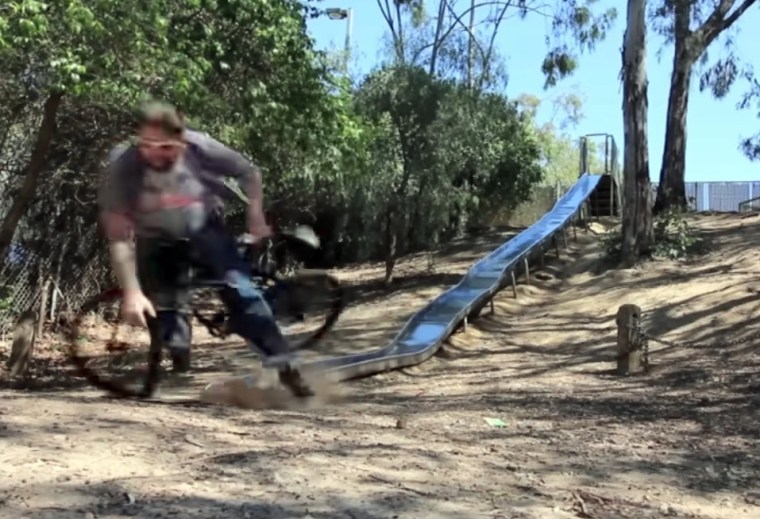 Inviting people to come along for the ride on his adventures, I think he was hoping that viewers might find something positive in those videos, even if it was nothing more than a good, heartfelt laugh which, I admit there were plenty of during the years I watched. One that sticks with me the most was TDW 1363 – Major Bike Wreck ! I’m a Complete Idiot – that famous bike ride down the children’s playground slide, March (23rd, I think) 2016. That video made me laugh so hard (although I honestly did feel bad for Adam). I kept coming back for more of his videos as did a lot of folks because I/ they found something of importance and value in Adam’s adventures. (The gentle reminder to never ride your bike down a kid’s slide, lol).
During Covid, with all of the lock downs and everything stalled, Adam was there, spending time in California, sharing his lock down experiences right along with us. As a matter of fact, it was his humor and small adventures during that period that was a breath of fresh air. Seeing him being able to get out and about and do something so simple as get a burger and eat it as he sat at a picnic table at a local park and talked was proof that life was still going on and there was the promise that routine would one day come back for all of us. He even did a few look backs at some of his older videos during that time and the bike ride down the slide was one that he covered. He laughed about it which made it okay for the rest of us to laugh too and not feel bad about doing it.
Taking Root
As I mentioned earlier, I know absolutely nothing about Adam’s life or motivations, but with that being said, about a year or two ago, the idea of taking root popped up in his mind and I think he tossed around the idea of either California or Florida and he eventually he chose to buy a house in Celebration, Florida, (suburb of Orlando, I think) which he had spent time visiting before buying a house there. Celebration was founded by the Disney Company (there is that Disney connection, again, lol) in 1994, though I’m not sure how involved Disney remains there today. Adam made Celebration—and Florida as a whole—feel exciting and inviting. He made me want to live there. I know I wasn’t the only one; there are videos of people admitting they moved to Celebration because of him, not to be near him, but simply because he made the place seem so special. He genuinely loved the place, and it was always a treat to watch him cruising around in his little golf cart, Mini Marge, showing off the houses decked out for each holiday.
But now that’s gone. No more Adam racing through the streets in Mini Marge. No more piping-hot caffeinated beverages to jump-start the day’s filming. No more quiet stops by Lake Rianhard hoping to spot the alligator he named “Cool.” No more talk about future plans for the channel—or his life. No more Adam, period.
As time passes, Celebration will fade into the background for me. There’s no reason to seek it out anymore. I could try to watch other YouTubers who live there and film the same places, but the truth is that—even though I still think Celebration is a lovely town—it will never be the same through someone else’s eyes. The magic came from that combination of Adam and Celebration. He was the lens that made it special, at least to me. Without him guiding the way, it’s just another town, no longer the place that once felt full of wonder and possibility.
His elderly parents live in Florida, which might have been some of his motivation for deciding to take root there and buy a house. Adam came from a Christian family, with his father being a former (or perhaps retired) minister. I am hoping their faith is giving them comfort during this trying time and they are finding solace in their belief that they will see Adam again in the next life. So, looking at it from that view, his passing isn’t a goodbye, it is merely a “so long” for now.
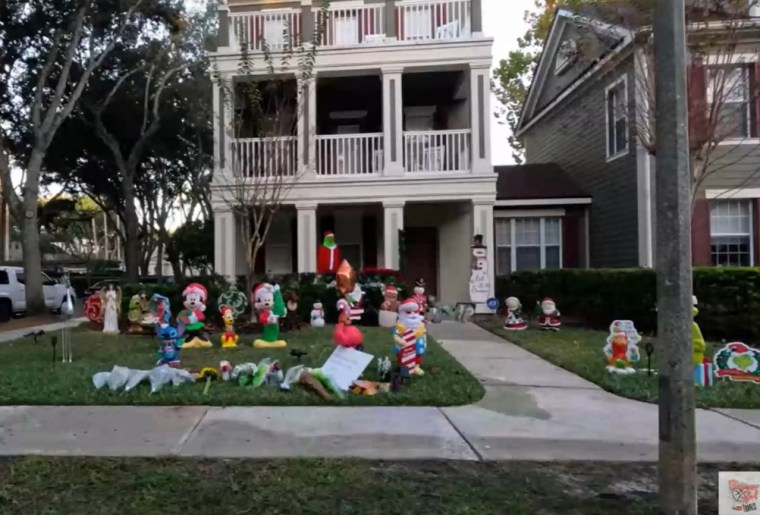
Adam had filmed, a few days before his passing, a video showing him putting out Christmas decorations in his yard. I watched a video he filmed some time around the beginning of November as he shopped for some of these items. He seemed happy with what he had there and planned to expand the set up with each passing year, but that, of course, will not happen.
The photo below shows his yard, right after the news of his passing was made public. Flowers and other memorial tributes were being left at his house, with fans writing goodbye messages on the sidewalk in chalk. I heard that the tributes as well as Adam’s Christmas decorations will be allowed to remain until the first of the year, then they will be taken down. (Update: They have been removed.)
His Final Resting Place
UPDATE: A few days ago, I came across a listing on Find a Grave that stated Adam had been buried in a cemetery in or near Kissimmee, but that information turned out to be incorrect. I have since learned that about a year ago he purchased a plot at the Mount Peace Cemetery (also known as St. Cloud Cemetery), located at 755 E. 10th Street, St. Cloud, Florida and that is where he was buried on January 6. At this time, his grave does not yet have a marker. I speculate that the reason his burial took so long was because the county coroner had to do an autopsy and that takes time. Now that his burial location is known, I’m sure people will begin visiting to pay their respects. If I ever have the opportunity to travel to Florida, I would like to do the same. Below is a photo of his grave, a day or so after his burial. 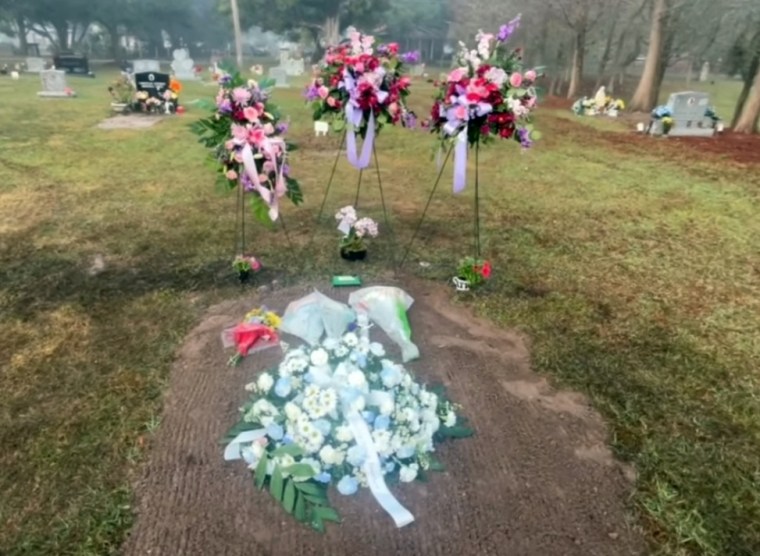
UPDATE: A photo of Adam’s grave with the headstone installed.
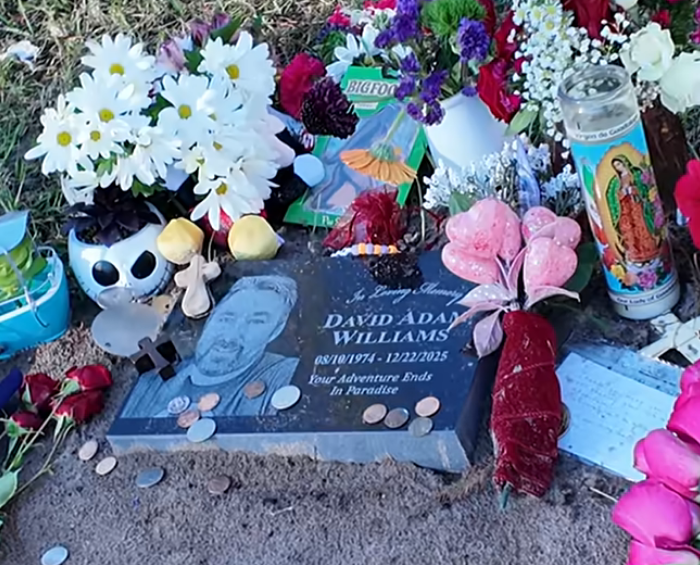
Below is a write up that I found on the erroneous listing on Find A Grave Site. I have no idea who composed it.
David Adam Williams, known by his online name Adam the Woo, was an American YouTube vlogger and musician. He gained prominence as a travel influencer, focusing on exploring Disney theme parks, filming locations, and abandoned attractions.
He was born in Tupelo, Mississippi, on August 10, 1974 to June, a retired school bus driver, and Jim, a Protestant youth minister. He grew up going to church every Sunday, and attended Bible classes twice a week. As a result of his father’s ministry work, the family moved thirteen times throughout the United States, with Williams having to find ways to entertain himself on his own. His father stated that the family would borrow a video camera from members of the church congregation, and Adam would record video segments with his sister. The family did not own a television set until 1985, when Adam was 11. In order to watch movies, the family would rent a VCR for the weekend.
Adam was home schooled from the 8th through the 11th grade, when he took his GED test.
Adam started his eponymous “adamthewoo” YouTube channel in 2006, making him one of the first content creators on the vlogging platform. After attending various punk/alternative rock shows in and around St. Cloud, Florida, Adam formed a band called “Ten New Toes” in 2007. The band subsequently adapted the initials TNT, later changing their name to “The New Threat”. Adam continued filming and uploading videos for YouTube in 2008 as a member of TNT, capturing behind the scenes moments with the band.
By the next year, Adam progressed to doing travel segments while living out of his van, covering roadside attractions while on tour with both TNT and American punk rock band Guttermouth. Several early videos Adam made ended up on the band’s YouTube channel beginning around 2010. TNT toured the United States, and a few band members-including Adam on bass guitar-joined the touring lineup for Guttermouth in 2014.
Now referring to himself as “an 80s pop culture nerd with a desire to travel and video what I see”, Williams started a second YouTube channel called “TheDailyWoo” in July 2012, which went on to become more successful than the first. He began what would become a five-year uninterrupted streak of recording and uploading daily short videos, amassing over 1900 of them within that time. His subject matter revolved around abandoned haunts, points of interest, roadside attractions and former movie filming locations in all fifty states. Some of the movie locations he covered were for cult films that flopped at the box office, but which still had legions of fans who were interested in trivial details of how the films were made. Adam ended the streak in September 2017, when he shifted to recording videos on an almost daily basis, focusing on his travels to amusement parks in the United States and other exotic locations around the world.
His style in creating these videos has been described as easygoing, with a “calm” and engaging approach. He eventually produced 4,000 videos and garnered over a million subscribers on his channels, with his work being particularly focused on the Disney parks.
By February 2022, Adam had garnered almost 300 million views on his YouTube channels.
Just a Big Kid at Heart
Adam was a big kid at heart-a perpetual twelve-year old in the very best possible way.
Thankfully, Adam’s YouTube channels remain, allowing us to revisit his adventures again and again. While that’s bittersweet, it also means Adam lives on through his work. I hope his videos continue to inspire those who discover them for the first time, and that those of us who watched them as they were released can still find something new—something inspiring—within the familiar. Most of all, I hope we always keep Adam close to our hearts. Adam, you were a loving and devoted son, a decent human being, a fun YouTuber and I am gonna miss YOU!
A few quotes from Adam
You can’t look at the past you have to look at the future, and that’s what I want my life to be about, not dwelling in the past, not sitting stagnant, as hard as it is, as hard as it is, you always have to move forward and to push on, you cannot let the past hold you down, you cannot let the past keep you in check you cannot let the past stop you from doing what you wanna do, you have to keep pushing forward moving forward going after what your heart tells you to do, where aspirations and dreams are. June 29, 2016
Little remnants of what you created will always remain.

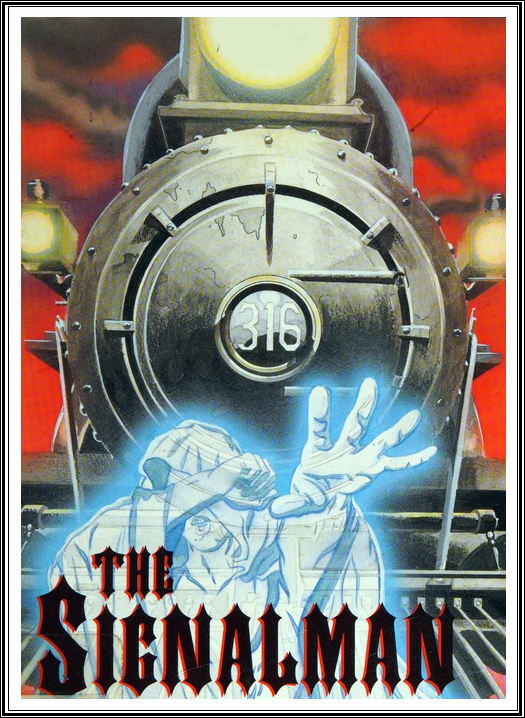 On June 9, 1865, Charles Dickens was caught in a serious train accident known as the Staplehurst Disaster. The train he was riding on derailed as it crossed a damaged railway bridge and plunged toward the river below. Miraculously, the coach Dickens was in teetered on the edge of the bridge without falling. He managed to climb out and spent the next hours helping rescue injured passengers.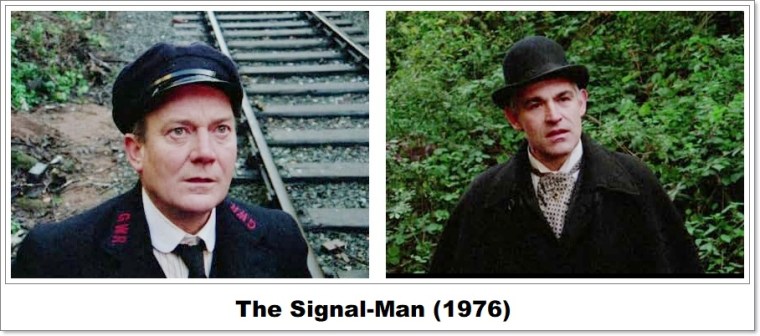
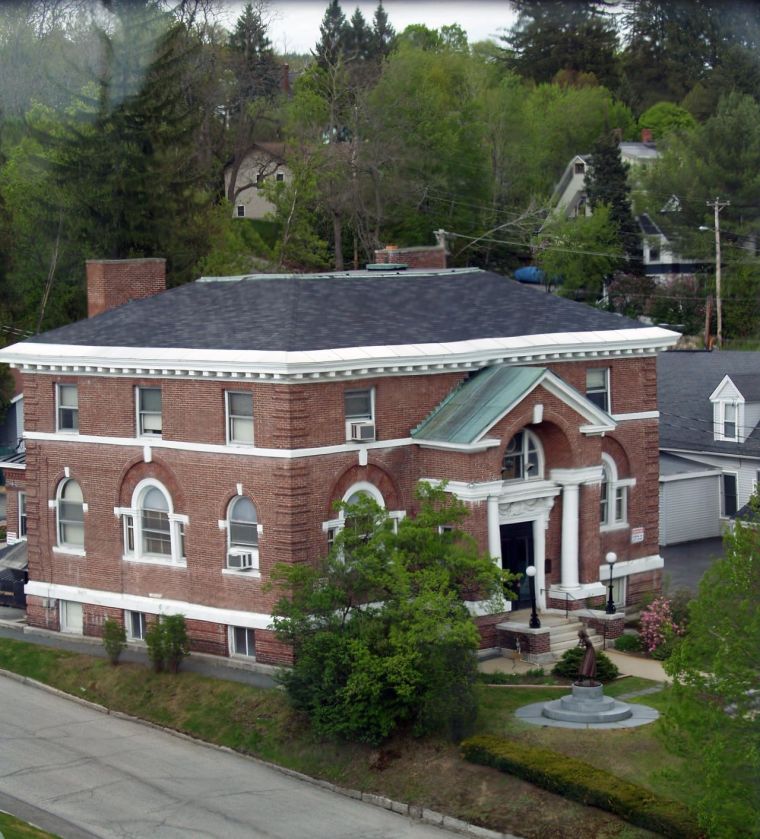
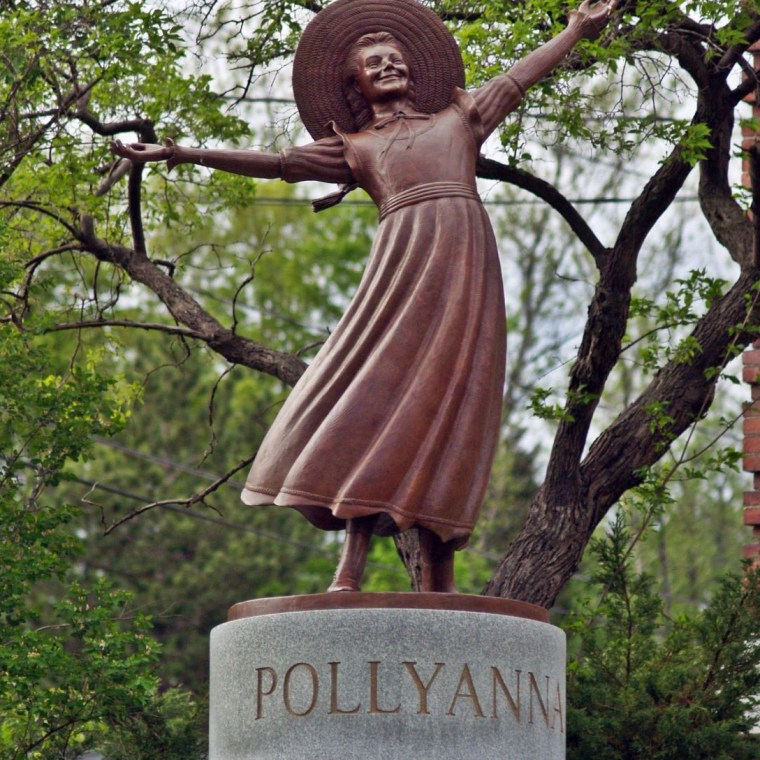 In 2003, the library unveiled a statue of the beloved literary character
  In the December 28, 1900 edition of the newspaper the Hollis Times in Hollis, New Hampshire a person who only identified themselves as G.R. gave his or her thoughts about how the coming 100 years would evolve.
 Planet Graple